How To Get Mud Off My Truck? The Ultimate Montana & Wyoming Guide
If you live in Montana or Wyoming, mud on your truck is basically a way of life. Between gravel roads, spring melt, ranch work, and backcountry adventures, your truck is going to get dirty. The problem is that letting heavy mud sit on your vehicle can damage your paint, clog wheel wells, and trap corrosive materials like road salt and magnesium chloride.
Here’s our complete guide to safely and effectively getting the mud off your truck — whether you want a quick clean or a deep reset after a weekend on the trails.
Why Mountain West Mud Sticks So Badly
Mud in this region often contains:
Clay, which bonds strongly to surfaces when dry
Fine gravel or grit that can scratch paint if wiped
Magnesium chloride residue from winter road treatments
Silt that packs into seams, wheel wells, and suspension components
This combination dries into a hard, stubborn layer that needs proper softening before removal.
1. Let the Mud Soften First (Don’t Scrub Dry Mud)
Trying to scrub dried mud can grind grit into your paint.
Instead, loosen it with water pressure first.
Best option: Pull into our self-serve bay and rinse the truck top to bottom — especially wheel wells and undercarriage areas.
2. Spray Off as Much as You Can With High Pressure
High-pressure rinsing removes most heavy buildup without the need for brushes.
Start from the undercarriage
Move to wheel wells & tires
Then rinse the sides, tailgate, and rocker panels
Our self-serve high-pressure wand works especially well for compacted ranch, trail, and construction mud.
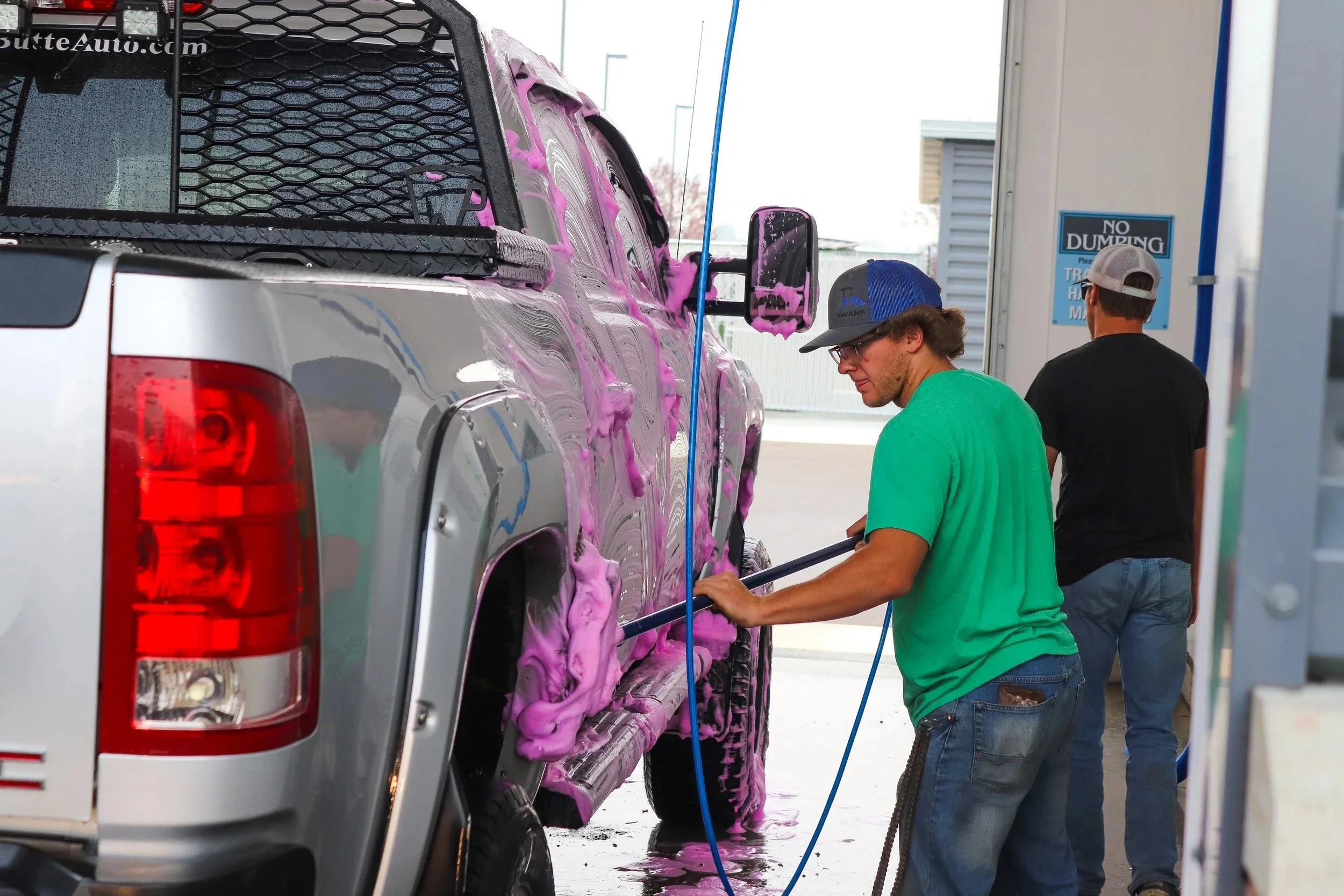
3. Use a Foam or Pre-Soak to Break Up the Film
Montana/Wyoming clay mud often leaves a film after rinsing.
Use a foaming pre-soak detergent (available in all our self-serve and automatic bays).
Let it sit for 30–60 seconds.
This step helps lift the clay residue without harsh scrubbing.
4. Rinse Again — Then Let the Auto Bay Finish the Job
After loosening and breaking down the mud:
Option A (Quick & easy): Drive straight into one of our automatic bays for a full wash cycle.
Option B (DIY): Stay in the self-serve and finish with a brush + soap, then final rinse.
Either way, make sure you complete the cycle with:
✔ Spot-free rinse
✔ Drying cycle or microfiber towel
